

Everest Three Passes Trek offers the ultimate and complete high-altitude adventure. Three formidable passes of the Khumbu region to get overall. Similarly, Kongma La (5535m), Cho La (5330m) and Renjo La (5445m) are the three well-known passes for Everest hiker. Three passes are the kind of adventure gets tough. Everest trek itself offers the sublime views of tranquil Gokyo Lakes trek along with viewpoint Gokyo Ri. Everest Base Camp and Kalapatthar at once glance. On the Everest journey of the foot, you can also see the remote and untouched Nangpa La valley. Moreover, A beautiful Sherpa village of Marlung, mountain museum, and monastery. Everest Three Passes Trek is one trip you want to do. If you’re one of those daring adventure lovers.
This trek for those with the time and physical ability. No doubt Everest Three Pass Trek is one of the most spectacular journeys on the planet. Highlights of the Gokyo RI view Everest Base Camp route and the stunning Gokyo Lakes add beauty. Everest contains 3 epic and increasingly popular loop in trekking. Are you looking to avoid crowds? Trek has full of Tibetan culture, natural diversity should take a closer look. Passing these 5000m mountains not require any technical skills.
Everest Three pass trek is purely a challenging holiday in the world. Everest three passes trip is the physically demanding trip. However, crosses 3 high passes links to the four distinct valleys of Bhotekoshi, Gokyo, Khumbu, and Imja Tse. Before heading to the less trodden trail. The Thame and Lungden are another hidden towns. We will spend the few nights in Namche Bazar for acclimation.
Everest Three passes trek Renjola, Chola and Khongmala
The Renjo la crossing is tough but you will bless with a stunning Himalayan view. Including Mt. Everest with pristine Gokyo lakes at single Angle of Camera. We start to climb the Gokyo Ri and continuing for Cho-la. The first of our three peaks on our list to climb. Afterward, join the popular EBC trek route.
Ultimately, we climb to Kalapathar peak and Everest base camp for the final view. Everest trail leads us towards Chukung from Lobuche crossing the Kongmala pass. The last pass in our trip adds another tremendous adventure in the Khumbu journey epic. From Chukung we climb our third peak: Chukung Ri great hiking to the top. Exploring the most dramatic scenery of Amadablam, Lhotse, Nuptse, and Makalu.
Furthermore, after reaching the top of the 5000m, we could see the impressive close-up view of the Everest range. Our return route passes through Tyangboche, a magnificent location with a fascinating monastery. The finally our epic trip will end at Lukla. Everest three pass trek cost and itinerary could be different. Our Everest three pass trek itinerary is flexible for all kinds of mountain lovers. Everest hiker has various three passes trek reviews regarding this trip.
The highlight of Everest three pass trek:
Three Passes trek has both respects for mountain sights & local culture. Significant highlights of Three Passes Trek are: the common starting point of the Everest Three High Passes Trek is the Lukla fly.
- Hike a circuit around the total Everest valley
- Incredible sights of the highest mountain on the planet with a spectacular view.
- Cross 3 demanding over 5000 meters passes: Renjo La, Cho La & Kongma La
- Experiences of the Everest Base Camp trek behind Gokyo RI, and Kapalather.
Itinerary
Cost Include
- Airport / Hotel / Airport pick up & drop by private tourist vehicle.
- Three nights standard twin sharing accommodation in a three-star level hotel in Kathmandu; Breakfast included. (2 nights)
- All your standard Meals during the trek (Breakfasts, Lunches, and Dinners) with one cup of tea/coffee per day.
- Lodges, Guesthouses accommodation during the trek
- Licensed English speaking guide.
- The required number of local staff and porters to carry your luggage during the trek (We assign one porter for every two guests).
- Food, accommodation, salary, insurance, equipment, and medicine for all staff.
- Everest National Park permits and TIMS permit for trekking.
- Airfare from Kathmandu – Lukla – Kathmandu including airport departure tax in Kathmandu and Lukla airport.
- Surface transfer from and to Kathmandu.
- Farewell dinner in a typical Nepali Restaurant with on the second last day.
- All our government taxes, vat, tourist service charges.
- Official expenses.
Cost doesn't include
- Air travel to/from Nepal,
- Lunch & dinner in Kathmandu,
- Soft/hard drinks, laundry, postage, telephone bills, all items of personal nature,
- Personal clothing, insurance against accidental, medical and emergency rescue evacuations,
- Respective expenses if one returns earlier from the trip due to sickness or emergency purpose.
- Sightseeing around Kathmandu valley.
- Travel Insurance
- Emergency helicopter rescue evacuation arrangements will be covered by travel insurance.
Check Gear list for Everest hiker
In most of the causes before start our adventure, we’ll spend a day or part of a day doing some casual sightseeing in world heritage site valley surrounding before we leave for the trek, and we’ll check gear when you arrive if anyone needs for the trek. Please have photos, passport photocopy airline tickets to re-confirm and insurance information ready if needed. Let’s us detail.
Recommend Day-pack for Everest hiker
We recommend a 30-45 liter Day-pack for each in case of porter hiring. Better to have it too large than too small, as on pass days you’ll want to carry more when you need. Most have internal water bladders built in, which are good to have it for any situation. Make sure it’s comfortable before leaving home. Mines are 55 and 65 liters.
Generally if you are going to hire porter in your daypack, you’ll be carrying 1 or 2 liters of water, a wind/Gortex/soft/ hard-shell jacket, wind/rain pants, hat & gloves, extra socks, sunscreen, snacks, water purifying tablets or filter, camera, a plastic bag or pack-cover and maybe a down jacket. Others remaining porter will assist you.
Packing/Storage
It’s easiest to pack and unpack from a duffel-bag, do for the most natural, porters to carry as well… Inexpensive and/or sound quality duffel are available in Kathmandu, but we can provide upon your request but it’s best to invest in a robust and waterproof duffel such as a North Face. You can leave/store extra gear in Kathmandu at our office storage room free of charge.
Extra Gear & Villagers
If anyone has old/extra/used gear of any sort, bring it along if you have room in your duffel you can donate it for porters and some orphans center or donation for villagers.
Our porters & staff also appreciate it can be old shirts, jackets, pants, fleeces, shoes to your old trekking socks. We often have a raffle on the first day of the trek, and each porter will get at least one ‘new’ thing, which is fun for them.
Recommend Snacks for Everest hiker
It’s always good to have some snicker or bars at lower elevations. You crave terrific things at altitude, and often need energy in a way that you usually don’t at lower altitudes energy bars, electrolytes, etc are essential for long days or passes. Lemonade mix, Emergen-C, Tang, etc great to have for hot days in your water bottles it can make huge differ. If anyone has a favorite cookie/biscuit, bring a package to share in the tent in the evenings with staff if you want. And anything else that you can bring particularly likes.
Water Purifiers & Filters
You can bring an MSR ceramic purifying/filtering pump along on the trek which everyone can use to pump fresh water in the evenings for the next day’s drinking water, ecologically the best way to get water in the Himalaya’s fragile trekking regions. Bring your pump, UV purifier or iodine tablets to have the capacity for fresh water whenever you want in route. Please bring at least unbreakable plastic/metal water bottles.
What we need for Everest trek
A copy of your travel medical insurance (just one sheet with policy number, name, and international contact numbers) as well as password photocopy.
A copy of your Passport (front page) and Nepal visa
3 Visa-sized photo
Cash for Everest trek
We run trek basis on beautiful during the trek for drinks, snacks, candy bars, biscuits, beer, etc. There’s some good shopping in Namche, sometimes a chance to buy locally made products. For tipping the crew we recommend about $100 per person in Nepali rupees or USD. There are ATMs in KTM which give you 350 USD, and many money changers, banks, etc available in Kathmandu and Lukla. In Namchhe, you can change TCs or cash, and some other places cash but we recommend you do it in Kathmandu. Guide also have extra rupees with them if anyone runs out and needs to borrow. For each Everest hiker, $250 is an excellent amount to change when you arrive in KTM.
Camera/ mobile Batteries recharge system
There are now many places to recharge batteries in the Everest, Annapurna, Manaslu and Langtang region so bring your camera battery chargers otherwise bring your solar panel. We recommend always bringing extra batteries as it takes time to charge and there is often a line in busy time, charging is not always available and it can get expensive to charge your batteries up higher!
Washing & Showers in Everest trek
Showers are almost always available at the lodges of Everest regions. But they’re not cheap generally per head 3-5USD up to. So budget some extra cash if you like to shower daily! You can have (at no cost) a ‘warm washing bowl’ to wash up with. As for clothes, bring a small package of soap powder, and you can either wash your clothes yourself or laundry available in Namache our porters some money to wash them for you! That sometimes works.
Sleeping bag for Ebc trek
Down-filled sleeping bags rated to -10º are best because high altitude nights will be fresh for hikers but for peak climber more than…Good down is fluffy, light and thick. A muff makes a big difference to the overall warmth of a bag and a mummy bag is generally warmer than a rectangular one. If your bag is rated for a higher temperature add a fleece sleeping bag liner to add warmth to the alpine zone.
Day-pack for everest base camp trek
This should be comfortable in your choice, with a right waistband that transfers some of the weight to the hips. It needs to be big enough to take a jacket, fleece, drinking water, camera and odds and ends you might like during the day which should be always with you.
Duffel Bag for Everest hiker
If you travel with porters, bring your gear in a duffel bag which help to excess easy. Several companies make good duffel bags with a zipper along the side for ease of entry choose the best one. Get a bag that is durable and has a sturdy zipper some time it makes different. A duffel bag 40cm in diameter and about 80cm long is large enough to carry your gear and will usually meet the weight limit of porters and domestic flights rules.
Recommend Trekking Boots, for Everest trek
To finish happily trek you need comfortable feet. Quality boots have good ankle support, plenty of toe room for long descents, a stiff sole to lessen twisting torsion and are light, due to you don’t tire. Look at the inner lining – leather is good and Cambrelle is even better, a material that eats smelly foot bacteria and makes the extra relief. Good lightweight trekking boots or light all leather boots are ideal for a long day trek. Avoid arriving with brand new boots that you have not yet used before! Walk in your new hiking boots on some steep hills and make it smooth that will test trouble spots before you leave home. The longer the trek, the better the boots you need, so took the best one for a happy journey.
Socks,
In the low country area, your feet will be warm or even hot while walking so quality cotton mix sports socks are excellent. Three to four pairs are enough for the trek. Thick trekking socks are better for higher up because you may walk in the snow, and evenings are cold where you can exchange. We suggest you bring four pairs or even 1 more. Most modern trekking boots fit snugly so wearing two pairs of socks at the same time is impractical to think twice.
Camp Shoes,
Luxury for your feet at the end of the day: sandals or running shoes is the best idea.
Fleece top,
Most trekkers consider this is essential, but alternatives are a thick thermal top or a light down jacket. In Kathmandu, you can get cheap Korean fleeces but they are not the best quality you needed.
Down Jacket or fiber-filled jacket,
Down clothing has the advantage of being light and compressible for alpine. A down jacket will stuff into a small space when packed, yet puff up. You should bring a good down jacket on all treks from your country or can buy in Kathmandu. Most ski jackets that have been used in your country are not warm enough and most so-called expedition parkas are too heavy and bulky. Don’t bring both a heavy and a light down Jacket; choose one that will serve both purposes, preferably ideal one with a hood that is also stuffed with down. If you feel extremely cold at high altitude, you will likely to wear your down jacket inside your sleeping bag.
Wind or rain jacket
During the day trekking, you can use windproof, Waterproof and breathable. Plastic ponchos or non-breathable raincoats are not suitable for the trek.
Fleece/sweatpants,
Great for the chilly evenings, thicker is better and polypro is better than cotton in high.
Day-wear shirt,
T-shirts are favorite but a shirt with a collar and long sleeves are more practical during the day or in the evening. Regularly you can use two so you can swap damp for dry. Look one for shirts made of quick dry fabrics rather than cotton.
Trekking pants,
You will live in these. Light material, loose fitting, and dark-colored are best.
You can survive with only one pair but you have to bring two; get dusty or muddy so a change is a good idea. Cotton cheapies some marks in the local fashion, it is not necessary to have gore-tex or waterproof pants.
Neck gaiter,
For winter trekking they are the best for staying warm you need it, A fleece triangle with a Velcro fastening works well and is easy to pull up when the yaks stir up trail dust.
Trekking poles,
Useful, especially on steep, rough terrain, but if you are not used to using them you will not miss them someone who loves to do photography thinks twice.
Sunglasses,
Highly recommend good one suitable for snow, as it is bright up there, but specialized glacier glasses. Contact lens wearers report very few problems except cleaning them in the conditions it’s your matter. Ski goggles are unnecessary for trekking.
Mittens/Gloves,
These don’t need to be fancy (pockets are the warmest solution to cold hands), so local Kathmandu fleece gloves are excellent but you need it.
Water bottle,
Should be a one-liter size, except boiling water, and be leak-proof. You have to bring 2 or liter capacity in all. Sometimes mini Thomas a metal bottle can double as a hot water bottle on cold nights.
Torch,
LED bulbs are best for mountains. You will need a lamp for reading after dark, and for finding your way to the outhouses. A headlamp is excellent for climbing although many people prefer the second torch it’s enough.
Toiletries and odds and ends,
Bring essentials for the trek only otherwise you can buy in tea houses. There are a surprising number of showers or buckets of hot water available in the hotel. The smallest tube of toothpaste is perfect for a month in your favor. Roll-on deodorant can spare you grief with your tent partner toilet paper need. Hand cleaner in a bottle (“Purelle” or similar) is a good idea, it would be better for the environment than “handy wipes”.
Towel,
Bring only a small one for trekking, or consider using a sarong. Mountain shops sell towels made of a quick dry fabric which is cost around 10USD. In Kathmandu, city hotel do supplies towels. Sunscreen and lip care with sun protection extremely needed during the day sun is intense at altitude, especially after snow, and you will want to use these most days.
Water purification,
One bottle of iodine tablets between two, Douglas or Potable Aqua is the best one. Shops in Canada sell Pristine, which is a good option. We tend to use boiled water from the lodges but occasionally we need to take water from the streams. The use of mineral water bottle is discouraged from an environmental point of view and the higher it cost more.
Snow gaiters
These are not needed, but bring them if you already have some in case we get or cross a pass about 5400M high or you are coming in the winter season.
Evening camp wear,
Around the evening camp, you can wear camp shoes, lights sandals or leather boots. No matter what altitude and what season the temperature can get to -10º after dark. By far the best clothing is:
+ A down jacket, medium weight
+ Thick fleece pants
+ Fleece hat and neck gaiter
+ Thick shoes with wool socks
Available in Kathmandu or bring from home that we need.
1) Sleeping sheet
2) Duffel Bag
3) Trekking pants
4) Wind pants
5) Fleece top
6) Warm hat
7) Light gloves
8) Toilet paper
9) One litter of water bottle
10) Pee bottle
11) Lip care
12) Torch
13) Snow Gaiters
14) Water purification
Bring from home
1) Sleeping bag
2) Daypack
3) Trekking Boots
4) Running shoes
5) Socks
6) Camp shoes
7) Rain jacket
8) Nightwear top
9) Neck gaiter
10) Daywear shirt x2 or 3
11) Underwear
12) Sun hat
13) Sunscreen
14) Sunglasses
15) Toiletries and odds and ends
16) Small towel/sarong
17) Personal medicines
18) Camera
19) Money pouch/belt
20) Passport photos 2x
21) USD40 cash for a visa (30 days visa)
Three pass trek is known as a high passes trek in the world. So we must have the quality products with carefully chosen products.
Daypack is needed during the hiking, if you trekking with organized trip than (25–35 liters), daypack is great enough but if you are doing on your own then you must have to choose (70 – 80 liters) Pack cover necessary, Sleeping bag comfortable too -20 °c (depending upon the season, weather forecast and personal preference). It is possible to rent it in Kathmandu which cost 3$ per day.
Waterproof (optional) hiking boots are the most strongly with a familiar one, Camp shoes (down booties or running shoes) LED headlamp with quality one along with extra battery, 2 trekking poles for each. Camelback water bladder or sipper (water bottle) about 2 per pax.
We need Chocolates, Energy bar, Dry fruits, ORS and elector light drink. Down jacket with cover comfortable too is about -10, -15 • c. Most of the second hand or new equipment’s you can hire or buy in Kathmandu. And the cost will be cheaper for you to compare your country. And the more extra light jacket. T-shirt, goggles (UV protected) and 5 pair thermal pants and cap for sun cover, Waterproof gloves, woolen gloves, and socks. Sunscreen, moisturizer, lip balm and sanitizer handy.
We recommend adding a pair of Yaktrax or Microspikes. These are mini-crampons and might be needed if there is snow on the high passes which is always a good idea.
Mainly you have to be fit physically and mentally Everest 3 pass trek. You usually have to walk 5-7 hrs per day. So you have to prepare your body and mind that easily acclimated with the environment. Renjola pass day starts to moves alongside Dudh Pokhari for a while. We have to around two hours before descending towards to reach Renjo La pass 5360m. On the way, we are rewarded with breathtaking views of Mount Everest and Rolwaling ranges. Views from the Renjo La pass are much like that from Gokyo Ri at the beneath we saw Gokyo village the gray smear of the Ngozumpa Glacier. Continuing quick down a stone staircase and then moves over a loose scree to reach the south bank of Angladumba Tsho Lake. The presence of ice on the trail while descending can make our descent a bit hazardous for everesthiker
Besides all the above, you have to care what kind of guide and which company you are following.
According to our client’s experience, I would like to say you need to have a good level of fitness, it doesn’t mean to be an athlete. Everest 3 pass trek is an entirely different world being that high up and everyone’s body reacts to the altitude differently. Simple training before you go and can visit more here click.
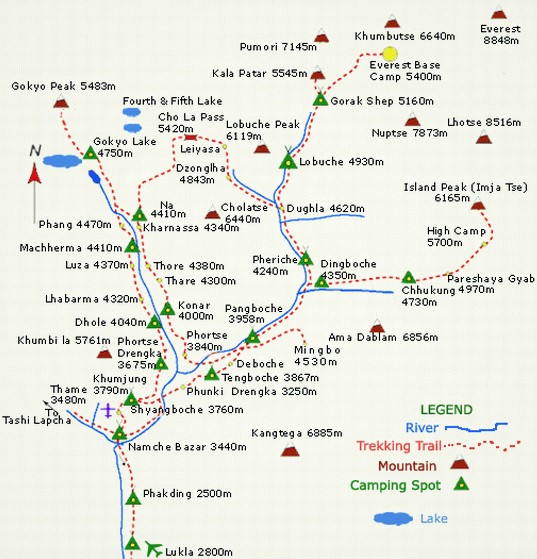
Starting from the far west of Dhodh Kosi valley. it crosses Renjo La pass to get into the Gokyo valley region. You have time here to visit the emerald many lakes in such high altitude that called Gokyo its name.
The trail continues goes over the Cho La pass into the Dudh Kose valley and Everest base camp trek. From here it heads up to Everest base camp and khongma la pass. After viewing spectacular view from kalapather we back to labouche for another pass. Finally, it heads back down and crosses the Kongma La pass arriving in the Imja Khola valley at Chukung village. In route, you will submit three great 5000m peaks: Gokyo Ri, Kalapatar, Everest, and Chukung Ri.
Literally yes, it is possible to complete the Three Passes trek in shooter days. But our itinerary is designed to give you the proper time to acclimatize in high places which are a vital point of success. And some rest days are for hiking to see alluring the Himalayas panorama. If you would like to attempt the trek in fewer days, contact us and explain your fitness level and experiences you have. And we can discuss the options as well let you another itinerary
Everest Three Passes trek, the best time from October to May. But in the winter months, there is likely to be a lot of snow on the route and most of the hotel will be closed. We do not operate open groups on this Everest three pass route from mid-November to early March.
Best season to trek in Three Passes Trek is spring and autumn are the most favorable seasons to do this trek. The monsoon season boast less expected climate but you can explore alpine flowers and many herbs, but Everest hikers still prefer this period due to less crowd. Winter season here gets may obstruct in the routes with lots of snow, but often provides clear skies with snowing night.
Three Passes trek has both respects for mountain sights & local culture. Significant highlights of Three Passes Trek are: the common starting point of the Everest Three High Passes Trek is the Lukla fly.
•Hike a circuit around the total Everest valley
•Incredible sights of the highest mountain on the planet with a spectacular view.
•Cross 3 demanding over 5000 meters passes: Renjo La, Cho La & Kongma La
•Experiences of the Everest Base Camp trek behind Gokyo RI, and Kapalather.
Accommodation and meals: The Everest province feature incredible infrastructure for Everest hiker. The available lodges (tea houses) are of considerably high-quality & they cater good meals. All of the food in Everest came up & down which we do fallow to our trek. Trekking in Nepal is always fun and bring the extreme adventure of alpine. For the courageous people with lots of alpine knowledge of arduous treks out there. Nepal has various type of trekking and touring option for travelers.
You can get all kind of food with the various item. You have different choices with the fancy menu but we would like to say to eat that local food and support the eco-tourism. Also the local prevents you from high altitude sickness.
It is hard to say that you will have altitude sickness according to their experiences. Because everyone’s body reacts to the altitude differently and the food has always a significant role. In general, most of the trekkers have suffered from the usual altitude problem. But some time psychology works more because people get afraid and do conscious more than enjoying the view. If anyone profoundly suffers from altitude problem there is always the option of Helicopter rescue. Be sure before starts trek your do cover insurance cover Helicopter rescue along medical as well. Otherwise, the company will free assist you to arrange payment would be extra for a Helicopter rescue.
Three Passes trek has both respects for mountain sights & local culture. Significant highlights and map details of Three Passes Trek are: the common starting point of the Everest Three High Passes Trek is the Lukla fly.
•Hike a circuit around the total Everest valley
•Incredible sights of the highest mountain on the planet with a spectacular view.
•Cross 3 demanding over 5000 meters passes: Renjo La, Cho La & Kongma La
•Experiences of the Everest Base Camp trek behind Gokyo RI, and Kapalather.